The contribution of Jawaharlal Nehru is rightly celebrated as that of a key architect of modern India. With unwavering faith in the Indian people, Jawaharlal Nehru sought to establish a democratic polity, an economically modernized nation, and a country with a clear role in the global community. Both a philosopher and a pragmatic political leader, he blended Western democratic ideals and a progressive worldview with his evolving understanding of Indian history and philosophy. As Michael Brecher noted in Nehru: A Political Biography, Nehru gained “a deeper appreciation of Indian history and philosophy,” enriching his perspective and guiding his subsequent actions.
Born in 1889, Jawaharlal Nehru was educated at home in Allahabad and later at Harrow and Cambridge. During his seven-year stay in England, he absorbed the traditions of British humanist liberalism, influenced by thinkers such as John Stuart Mill, Gladstone, and Morley, as well as George Bernard Shaw and Bertrand Russell. While not a political philosopher on par with Hobbes, Rousseau, or Marx, Nehru was undoubtedly a thinker of ideas and action.
Jawaharlal Nehru was a pivotal figure in India’s struggle for independence, working alongside leaders like Mahatma Gandhi, Vallabhbhai Patel, Subhas Chandra Bose, Jayaprakash Narayan, and Rajendra Prasad. As Congress President in 1929, he spearheaded the adoption of the historic resolution of Purna Swaraj (Complete Independence). He also led the interim government in 1946 and became independent India’s first Prime Minister, holding the position until his death in 1964. Throughout the freedom struggle, Nehru faced numerous imprisonments and played a significant role in shaping the Congress movement.
An accomplished writer, Jawaharlal Nehru authored several influential works, including Glimpses of World History, An Autobiography, and The Discovery of India. Despite his privileged background, Jawaharlal Nehru remained deeply connected to the masses, embodying a unique blend of intellectual rigor and practical leadership that continues to inspire.
Table of Contents
Brief Life
Jawaharlal Nehru (14 November 1889 – 27 May 1964) was a prominent Indian statesman and a significant figure in mid-20th-century India. Second only to Mahatma Gandhi in leading the Indian nationalist movement during the 1930s and 1940s, Jawaharlal Nehru became independent India’s first Prime Minister in 1947, a position he held until his death in 1964. A secular humanist and social democrat, Nehru championed parliamentary democracy, secularism, science, and technology, shaping India’s trajectory as a modern nation. In global affairs, he positioned India outside the two Cold War blocs and co-founded the Non-Aligned Movement. Nehru was also a prolific writer, with notable works like An Autobiography (1936) and The Discovery of India (1946), which continue to be widely read and studied.
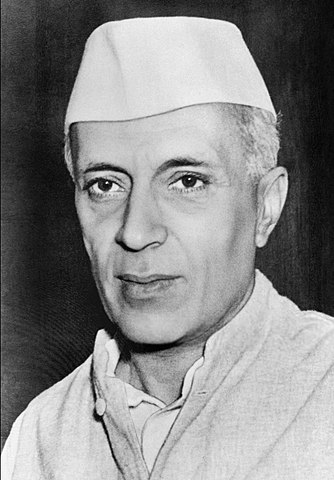
The son of Motilal Nehru, a renowned lawyer and nationalist, Jawaharlal Nehru was educated in England at Harrow School, Trinity College, Cambridge, and the Inner Temple, where he trained in law. After returning to India in 1912, he practiced at the Allahabad High Court but soon shifted his focus to national politics. Joining the Indian National Congress in 1919, Nehru emerged as the leader of its progressive faction during the 1920s, eventually gaining Mahatma Gandhi’s support, who designated him as his political heir. As Congress President in 1929, Nehru declared the goal of complete independence from British rule.
During the 1930s, Jawaharlal Nehru and the Congress dominated Indian politics. Despite spending several years in prison, he advocated for a secular nation-state and led the Congress to victory in the 1937 provincial elections. However, the Congress ministries resigned in 1939 to protest the Viceroy’s unilateral decision to involve India in World War II. Following the Quit India Resolution of 1942, Jawaharlal Nehru and other senior Congress leaders were imprisoned. By the time of his release in 1945, the political landscape had shifted significantly, with the Muslim League, led by Muhammad Ali Jinnah, asserting dominance in Muslim politics and demanding the creation of Pakistan. In 1946, Nehru became the interim Prime Minister, navigating the complexities of a divided India.
Upon India’s independence in 1947, Jawaharlal Nehru delivered his iconic “Tryst with Destiny” speech and was sworn in as the Dominion of India’s first Prime Minister. When India became a republic in 1950, Nehru continued as Prime Minister of the Republic of India. His tenure was marked by ambitious reforms, including the establishment of a pluralistic democracy, economic modernization, and the promotion of social equality. The Indian Constitution of 1949 reflected his commitment to legal equality for all citizens, irrespective of gender, caste, or religion. Economically, Nehru advocated for a mixed economy, emphasizing heavy industry and state-led development. Under his leadership, the Congress Party became a dominant political force, winning the general elections in 1951, 1957, and 1962.
Jawaharlal Nehru’s premiership, the longest in Indian history at 16 years and 286 days, ended with his death in 1964 from a heart attack. Widely regarded as the “Architect of Modern India,” his contributions are celebrated annually on his birthday, which is observed as Children’s Day in India. His legacy continued through his daughter, Indira Gandhi, who served as India’s Prime Minister from 1966 to 1977 and again from 1980 to 1984.
Jawaharlal Nehru’s Viw on Socialism
Socialism is a political and economic ideology advocating that the means of production, distribution, and exchange should be regulated or owned by society or the community. Jawaharlal Nehru was a prominent proponent of socialist principles in India. His goal was to achieve complete independence and social equity through the adoption of democratic socialism, a pragmatic approach to socialism that emphasized systemic economic transformation within a democratic framework. Nehru famously remarked, “There cannot be democracy without socialism, and there cannot be socialism without democracy.”
Although inspired by Marxism, Jawaharlal Nehru was critical of the conformity and uniformity it imposed. Reflecting on the Soviet model, he admired its progress but condemned its suppression of dissent, excessive violence, and regimentation. He wrote, “In Soviet Russia, I dislike the ruthless suppressing of all contrary opinions… But there was no lack of violence and suppression in the capitalist world, and I realized more and more how the foundation of our acquisitive society was violence.”
For Jawaharlal Nehru, socialism was about national control of capital to serve the collective good. His vision of socialism was scientific, practical, and evolutionary rather than revolutionary. It sought to include diverse groups, emphasizing cooperative farming and service institutions. Nehru’s socialism was egalitarian yet avoided forced leveling. It supported welfare, rational planning, and affirmative action while rejecting destructive competition and promoting local initiatives.
Globally, Jawaharlal Nehru saw socialism as a movement driven by democratic recognition, not bureaucratic imposition. He viewed it as a guiding principle offering momentum, direction, and a value system rather than a definitive endpoint.
Nehruvian Democratic Socialism in India
Democratic socialism combines a socialist economy—where production is collectively controlled or owned—with a liberal democratic political system. Jawaharlal Nehru rejected the authoritarian models of socialism and Marxism-Leninism, emphasizing a democratic structure compatible with India’s pluralism.
When India gained independence, Jawaharlal Nehru faced the challenge of defining a long-term development strategy. Drawing inspiration from both the Soviet planning model and the liberal principles of capitalism, Nehru envisioned a unique approach termed democratic socialism. He believed democracy and planning were interconnected, advocating an integrated system that addressed production, consumption, employment, transport, education, health, and social services. This approach aimed to enable the complete development of individual potential while ensuring social equity through state intervention in resource distribution and essential commodities.
Nehru’s Views on Planning
Jawaharlal Nehru regarded socioeconomic reconstruction as a cornerstone of India’s development. Impressed by the Soviet Union’s economic achievements through planning, he championed a similar approach in India. In 1938, the Indian National Congress established the National Planning Committee with Nehru as its chairman. His planning philosophy, termed Democratic Collectivism, emphasized consensus-driven development and the social implications of economic strategies.
Jawaharlal Nehru proposed a mixed economy, combining the public and private sectors. While foundational industries remained under public control, the private sector focused on consumer goods distribution. This model aimed to increase production, reduce disparities, and ensure equitable wealth distribution. Nehru’s industrial policies of 1948 and 1956 institutionalized this coexistence, with the state playing a dominant role in industrial development.
The Mixed Economy
Jawaharlal Nehru’s idea of a mixed economy was rooted in democratic socialism. He stated, “I believe in a socialistic pattern of society. We have declared this as our goal. But even there, we have not adopted a rigid attitude… The basic question before us is to increase the production of essential goods and their equitable distribution, reducing the disparity between the haves and the have-nots.”
In this framework, public and private enterprises worked together to drive national growth. Public enterprises managed foundational industries, while the private sector focused on consumer goods distribution. Jawaharlal Nehru prioritized state-led initiatives to achieve economic and industrial progress, integrating technology with modern agricultural and production methods.
Jawaharlal Nehru’s vision of democratic socialism and a mixed economy laid the foundation for India’s post-independence development. His policies reflected a commitment to balancing economic growth with social equity, ensuring that the benefits of progress reached all sections of society.
Jawaharlal Nehru’s View on Secularism
As India observes the 58th death anniversary of Pandit Jawaharlal Nehru, it is a fitting occasion to reflect on one of his most profound contributions—his unwavering commitment to secularism within the democratic framework of the nation. Jawaharlal Nehru’s efforts to institutionalize secularism effectively countered communal forces, setting a precedent unmatched by any other country in South Asia, where the cultural landscape is often intertwined with religion.
Roots of Nehru’s Secular Vision
Jawaharlal Nehru’s secular ideals were deeply influenced by his upbringing. He was nurtured in a pluralistic environment, with mentors like Ferdinand T. Brooks, a theosophist, and through interactions with Annie Besant and Munshi Mubarak Ali. His exposure to Jews at Harrow and the teachings of Buddhism, which rejected discrimination and dogma, left a lasting impact. Nehru found inspiration in Buddhism’s reaction against the restrictive nature of Hinduism, which further shaped his inclusive worldview.
Jawaharlal Nehru’s deep understanding of India’s pluralistic history also played a crucial role. He recognized that India had always been a mosaic of diverse religious traditions, from the ancient emergence of Buddhism and Jainism to the later arrival of Christianity, Islam, and Zoroastrianism. These shared histories, he believed, underscored a collective cultural memory. The unity demonstrated during the 1857 War of Independence, where Hindus and Muslims fought side by side, reinforced his belief in a secular and inclusive India.
Secularism in Political Practice
When Jawaharlal Nehru entered political life, his understanding of history informed his critique of communalism. He attributed its rise to various factors, with British colonial policies being a significant contributor. Nehru concluded that a functional government in a multi-religious nation like India must uphold religious diversity and avoid any bias toward a particular faith. This conviction led him to firmly advocate for the separation of religion and politics, aligning him with thinkers like Machiavelli.
Unlike Mahatma Gandhi, who sought to spiritualize politics, Jawaharlal Nehru believed that religion had no place in governance. While both leaders respected all religions, their approaches to secularism differed. Gandhi viewed politics as a means to achieve spiritual goals, whereas Nehru emphasized rationalism and scientific temper as antidotes to religious orthodoxy and superstition.
Combating Communalism and Majoritarianism
Jawaharlal Nehru’s secularism rejected communalism and majoritarianism, which he viewed as threats to national unity. During the national movement, he recognized the dangers posed by reactionary Hindu organizations and movements in the early 20th century. He countered these forces by promoting unity among diverse religious groups and collaborating with nationalist Muslim leaders. His anti-communal stance, rooted in the broader goal of strengthening the freedom movement, extended into the post-independence era, where he worked to ensure respect for religious diversity as a cornerstone of nation-building.
Rationalism and the Scientific Temper
Jawaharlal Nehru’s secular vision was intertwined with his rationalist outlook. Influenced by Buddhism’s emphasis on humanism, Jawaharlal Nehru believed that human values transcended religious orthodoxies. For him, serving humanity was the highest form of worship. This philosophy found expression in his emphasis on developing a scientific temper among Indians, which he saw as essential for combating superstition and religious obscurantism. In this sense, Nehru carried forward the legacy of social reformers like Raja Rammohan Roy, championing the elimination of social orthodoxies.
Democracy and Secularism: Twin Pillars of Progress
Jawaharlal Nehru saw secularism as inseparable from democracy. He argued that a secular order could not thrive without a democratic political system, as democracy ensured equality and liberty for all. His understanding of secularism extended beyond religious neutrality to encompass the universal values of equality and freedom. These ideals were enshrined in his Objectives Resolution in the Constituent Assembly, which laid the foundation for India’s democratic and secular framework.
Through his emphasis on secularism, rationalism, and democracy, Jawaharlal Nehru gave India a framework to navigate its religious and cultural diversity. He envisioned a nation where all citizens, regardless of their faith, enjoyed equal rights and opportunities. His commitment to these principles has left an indelible mark on India’s identity as a secular democracy, making him a towering figure in the annals of history.
Nehru’s Vision of Secularism
Secularism for Social Harmony
Jawaharlal Nehru advocated for a secular state as he firmly believed that secular provisions would foster socio-religious harmony among diverse groups. In a country with a wide range of religious beliefs, secularism could establish the foundation for a stable and peaceful society. The Constitution of India reflects this vision in Articles 25-28, which guarantee every citizen the freedom to profess, propagate, and practice any religion of their choice. Nehru was particularly invested in implementing a Uniform Civil Code, as outlined in the Directive Principles, to promote equality and cohesion in a pluralistic society.
Secularism for an Egalitarian Order
For Jawaharlal Nehru, secularism meant equal respect for all religions and equal opportunities for individuals of all faiths. This approach stood in stark contrast to theocratic states, where citizens were often divided into classes based on their religion—those with privileges and those without. Nehru regarded such discrimination as anti-democratic. By ensuring equal opportunities for all religious groups, secularism could provide socio-economic and political security to both the majority and minority communities, thereby fostering an egalitarian society and strengthening the democratic framework.
Secularism for National Unity
Jawaharlal Nehru envisioned secularism as a unifying force for India’s national integrity. In a country marked by religious, ethnic, linguistic, and tribal divisions, coupled with social and economic disparities, secularism was, in his view, the most pragmatic solution. He argued that secularism fosters a scientific mindset, free from dogma and obscurantism, which helps individuals rise above communal biases and work toward national unity. Jawaharlal Nehru recognized both the political and psychological dimensions of secularism, emphasizing the importance of mass education, urbanization, and industrialization as tools to promote secular ideals.
Secularism for the Protection of Minorities
In the post-independence era, Nehru placed significant emphasis on protecting minority communities. While he implemented reforms in the Hindu Code, he hesitated to introduce similar changes for Muslims. This hesitation attracted criticism, but Jawaharlal Nehru explained that the Hindu community had been intellectually prepared for legal reforms, whereas the Muslim community required more time and education to accept such changes willingly. He believed that a Uniform Civil Code could eventually be embraced by all communities through education and awareness.
Despite perceptions of partiality, Jawaharlal Nehru was committed to instilling confidence among minority groups, particularly Muslims, who had been deeply affected by the trauma of Partition. He assured Christians of the freedom to conduct evangelical work, provided it did not compromise India’s national unity. Jawaharlal Nehru argued that while the Hindu majority was inherently secure in India, protecting minority rights was essential, even if it required sacrifices from the majority.
Jawaharlal Nehru’s secularism was not merely a political principle but a comprehensive approach to ensuring social harmony, equality, national unity, and minority protection, laying the groundwork for a stable and inclusive democracy.
Political Ideas of Jawaharlal Nehru
On Nationalism
Jawaharlal Nehru was a passionate nationalist, although he did not formulate a specific theory of nationalism. He firmly believed in the intrinsic unity of India, rooted in its cultural foundations, which he viewed as secular rather than religious in a narrow sense. Nehru embraced the country’s diverse traditions while celebrating the thread of unity that ran throughout its history. He was inspired by the concept of cultural pluralism and synthesis, which he saw as integral to India’s identity. To Nehru, nationalism was a noble expression of collective pride. He wrote:
“Nationalism is essentially a group memory of past achievements, traditions, and experiences, and nationalism is stronger today than it has ever been. Wherever a crisis has arisen, nationalism has emerged again and dominated the scene, and people have sought comfort and strength in their old traditions. One of the remarkable developments of the present age has been the rediscovery of the past and the nation.”
Jawaharlal Nehru understood nationalism as having solid social, political, and economic foundations. A natural nationalist, he was also a rebel against authoritarianism and disliked political submissiveness or excessive reliance on dialogue with authority. This affinity drew him toward Bal Gangadhar Tilak, whose radical political stance he admired. Nehru acknowledged this connection, saying, “So far as political matters were concerned, I was, if I may say so, an Indian nationalist desiring India’s freedom, and rather inclined, in the context of Indian politics, to the more extreme wing of it, as represented then by Mr. Tilak.” However, Nehru did not share Tilak’s deep religious motivations.
Jawaharlal Nehru’s nationalism had distinct features. It was composite, dynamic, and inclusive, appealing to humanity’s higher aspirations. For Nehru, this form of nationalism could inspire the struggle for freedom and unite people with vitality and purpose. At the same time, he opposed narrow and fanatical nationalism, warning against its dangers.
R.C. Pillai summarized Nehru’s stance: “Nationalism would be harmful if it ever made the people conscious of their own superiority. It would be most undesirable if the spirit of nationalism pushed any people towards aggressive expansionism.” Nehru himself emphasized Indian nationalism’s liberal and tolerant nature, stating, “Nationalism is essentially an anti-feeling, and it feeds and fattens on hatred and anger against other national groups.”
For Jawaharlal Nehru, nationalism translated into patriotism and a steadfast commitment to India’s independence. He firmly believed in complete independence, rejecting the idea of dominion status within the British Empire. In 1928, he declared, “If India has a message to give to the world, it is clear that she can do so more effectively as an independent country than as a member of the British group.” This commitment culminated in Nehru presiding over the historic Lahore Congress session of 1929, where the resolution for Purna Swaraj (complete independence) was adopted.
Jawaharlal Nehru’s nationalism, therefore, was a force for unity, progress, and independence, rejecting parochialism while striving for a pluralistic and inclusive vision of India.
On Democracy
Jawaharlal Nehru was an ardent advocate of democracy, consistently emphasizing its significance and passionately aspiring for independent India to follow a robust democratic process. His deep commitment to freedom was shaped by his upbringing in Western democratic traditions. Nehru absorbed modern democratic ideas early in life and drew inspiration from philosophers like Rousseau, Montesquieu, and Mill, referencing their works extensively in his writings. Reflecting on his influences in An Autobiography, he remarked, “My roots are still perhaps partly in the 19th century, and I have been too much influenced by the humanist liberal tradition to get out of it completely.”
To Nehru, democracy was not merely a political system but an intellectual condition and a way of life. It was rooted in the belief that freedom is intrinsic to human existence. However, he also recognized that freedom could only thrive under certain conditions. Nehru wrote: “Self-discipline, tolerance, and a taste for peace – these were the basic conditions for living a life of freedom.” He dismissed the notion of unrestrained freedom as untenable, emphasizing that freedom must be guided by responsibility. According to M.N. Jha, Jawaharlal Nehru believed that the state existed to realize the freedom of its citizens by countering the negative influences of human instincts in the social process. Nehru viewed the state as a spiritual necessity, capable of transcending the divisive convictions often promoted by religion.
Jawaharlal Nehru’s unwavering faith in democracy was evident in his belief that democracy was a spiritual proposition. He argued that the spiritualization of a social process was “synonymous with the maximization of democracy within it,” which required not just the safeguarding of rights but also their active realization.
Jawaharlal Nehru’s understanding of democracy evolved over time, carrying distinct implications. During the early years of the freedom struggle, democracy for Nehru symbolized self-rule and responsible governance. Later, under the influence of socialist ideas, his vision expanded to encompass economic and political equality of opportunity. For Nehru, democracy came to mean a system that allowed every individual the freedom to grow and develop to their fullest potential.
Thus, Jawaharlal Nehru’s concept of democracy was both dynamic and inclusive, combining the ideals of liberty, equality, and justice with the aspiration for individual and collective growth. It was a vision that sought to balance freedom with responsibility and to align political governance with social and economic progress.
Individual Freedom and Equality
Jawaharlal Nehru was, by nature and conviction, a staunch democrat who regarded individual freedom and equality as fundamental pillars of any democratic polity. He believed that the creative spirit of humanity could thrive only in an environment of freedom. For Jawaharlal Nehru, both society and the individual needed to enjoy freedom to preserve and promote the values of human life. He emphasized that the primary purpose of a democratic society was to create conditions conducive to creative development.
Jawaharlal Nehru articulated why India must embrace the democratic process, stating:
“It is not enough for us merely to produce the material goods of the world. We do want a high standard of living, but not at the cost of man’s creative spirit, his energy, his spirit of adventure—not at the cost of all fine things of life which have ennobled man throughout the ages. Democracy is not merely a question of elections.”
Central to Jawaharlal Nehru’s philosophy was the primacy and autonomy of the individual. He maintained that the state had no right to suppress individuals and that genuine progress could only occur when human creativity was unfettered. His concept of individual freedom encompassed freedom of speech, expression, association, and other vital aspects of human activity. Nehru believed the overall health of a society was largely determined by the extent of its people’s freedoms.
Equality was another cornerstone of Nehru’s democratic vision. He declared: “The spirit of the age is in favor of equality.” For Jawaharlal Nehru, the doctrine of equality entailed equal opportunities for all, underpinned by a profound faith in and respect for humanity. He believed that the progress and well-being of individuals, groups, or communities depended on ensuring equal opportunities for everyone, especially for the weaker sections of society who required additional support to achieve parity.
Thus, Jawaharlal Nehru’s ideals of individual freedom and equality were intrinsically linked, forming the foundation of his democratic thought. They reflected his vision of a just and inclusive society where creativity, opportunity, and respect for every individual could flourish.
Nehru’s Vision of Parliamentary Democracy
Preference for Parliamentary Democracy
Nehru supported the parliamentary system over the presidential model, drawing on India’s cultural traditions and historical experience under British rule. He viewed parliamentary democracy as more flexible and better suited to accommodating India’s diverse social groups. Unlike a presidential system, parliamentary democracy allows for a platform where different groups can voice their demands and agitations. While Nehru did not always agree with such demands, he often integrated them into the democratic process, ensuring their concerns were addressed.
For example, the reorganization of states on a linguistic basis reflects this approach. Nehru initially resisted the demand for Andhra’s separation from the Madras Presidency but ultimately constituted the States Reorganisation Committee. This decision showcased his pragmatic leadership, as he prioritized national harmony over theoretical objections. Such accommodations strengthened India’s federal structure, even though the Constitution describes the country as a “union of states.” By redistributing powers between the center and states, the framework nurtured linguistic and cultural identities while maintaining unity.
Inclusivity in Governance
Parliamentary democracy, according to Jawaharlal Nehru, enabled the inclusion of diverse states and communities in governance. The cabinet system allowed representatives from various groups to participate in the Council of Ministers, fostering a spirit of federalism. This inclusivity was unattainable in a presidential system, where executive appointments rest solely with the President, risking authoritarian tendencies. In contrast, a Prime Minister, as the first among equals in the Council of Ministers, operates within a collective decision-making framework.
Nehru exemplified this democratic spirit through constant communication with Chief Ministers and openness to differing viewpoints. For instance, despite his strong opposition to the President of India, Rajendra Prasad, on the Hindu Code Bill, Nehru sought to accommodate Prasad’s concerns while upholding the constitutional boundaries of their roles. He believed the President should act as a guide and friend rather than a master.
Balancing Democratic Institutions
Jawaharlal Nehru played a pivotal role in maintaining the balance between the legislature, executive, and judiciary. He deeply respected the legislature, regularly attended Lok Sabha sessions, and listened attentively to opposition leaders. His cabinet members were encouraged to prepare thoroughly for parliamentary debates, ensuring constructive discourse. Jawaharlal Nehru’s leadership ensured that India’s nascent democracy operated effectively, earning admiration from both domestic and international observers.
He worked collaboratively with opposition leaders like Ram Manohar Lohia, Acharya Kripalani, and Masani. Even non-parliamentary figures like Jayaprakash Narayan and Vinoba Bhave recognized his leadership. Jawaharlal Nehru extended administrative support to initiatives like the Bhoodan movement, led by Bhave, demonstrating his commitment to inclusive governance.
Elections and Democratic Legitimacy
Jawaharlal Nehru emphasized the importance of periodic elections for the legitimacy of parliamentary democracy. Under his leadership, the Congress Party consistently won general elections by presenting clear manifestos that resonated with the public. For instance, the 1946 election manifesto promised the abolition of the Zamindari system, a pledge that garnered widespread support even before independence. Similarly, the Congress manifesto for the 1952 elections highlighted the implementation of the first Five-Year Plan, focusing on rural and industrial development, which the electorate overwhelmingly endorsed.
Jawaharlal Nehru viewed elections as festivals of democracy, fostering political participation and competition among parties with diverse ideologies. He valued the role of opposition leaders in enriching parliamentary debates and even facilitated their participation in elections to strengthen democratic discourse.
Electoral Politics and Social Mobilization
Jawaharlal Nehru believed elections served as a platform for mobilizing various social groups, integrating their demands into the political system. Under his leadership, the Congress Party garnered support from all sections of society, cutting across caste and class lines. This inclusivity enhanced the capacity of the political system to address the evolving needs of a diverse population.
Jawaharlal Nehru’s unwavering commitment to parliamentary democracy ensured its adaptability to India’s pluralistic society. His inclusive leadership, respect for democratic institutions, and dedication to electoral politics laid the foundation for a robust democratic framework. By balancing tradition with pragmatism, Nehru steered India toward a system that celebrated diversity, promoted unity, and nurtured democratic ideals.
Nehru’s Contribution to International Outlook
Balancing Nationalism with Internationalism
Jawaharlal Nehru’s legacy in shaping an international outlook for India is both significant and transformative. While he was a dedicated nationalist, committed to the vision of an independent India, his foreign policy reflected a keen understanding of the nation’s broader role in global affairs. His advocacy for non-alignment as the cornerstone of India’s foreign policy was rooted in safeguarding national interests.
Non-alignment allowed India to focus on modernization and development without being drawn into the ideological and military conflicts of the Cold War. Aligning with either of the two power blocs would have jeopardized India’s economy, politics, and internal stability. Nehru’s insistence on an independent foreign policy was, therefore, both pragmatic and patriotic, underscoring his deep nationalism.
The Internationalist Vision
Despite his nationalist roots, Jawaharlal Nehru was, at heart, an internationalist. He envisioned India playing an active role in fostering global cooperation and peace. As the architect of the Non-Aligned Movement, Nehru elevated this principle into a force on the international stage, advocating for a balanced approach between nationalism and internationalism. He believed that narrow nationalism leads to imperialism, fascism, and exploitation—threats he vehemently opposed.
Nehru’s vision extended to the creation of a world federation or republic that prioritized collaboration over domination. He frequently emphasized the interdependence of nations, arguing that production, markets, and transportation had become inherently global. “No nation is really independent,” Nehru stated, “they are all interdependent.”
Advocacy for World Peace and Cooperation
Jawaharlal Nehru’s internationalist ideals were deeply influenced by his rational and pragmatic outlook. As Professor Varma notes, Jawaharlal Nehru’s commitment to human welfare made him a staunch advocate for peaceful coexistence and the concept of “one world.” In an era marked by the advent of nuclear weapons and the looming threat of chemical and neutron warfare, Nehru emerged as a tireless proponent of disarmament and world peace.
Nehru firmly believed that global peace was the only alternative to the rising specter of terrorism and conflict. His unwavering support for the United Nations reflected his commitment to creating a platform for international dialogue and cooperation. Nehru’s advocacy for peace and disarmament positioned him as an apostle of global harmony and a visionary leader committed to the welfare of humanity.
Nehru’s ability to balance nationalism with internationalism shaped India’s foreign policy and its role in the global community. His dedication to non-alignment ensured India’s sovereignty while fostering peaceful coexistence and collaboration among nations. By championing global interdependence, disarmament, and international cooperation, Nehru left an enduring legacy as both a nationalist leader and a true internationalist committed to the ideals of world peace.
Nehru’s Scientific Temper
A Rationalist Approach to Modernity
Jawaharlal Nehru’s scientific temper shaped his worldview and guided his vision for India’s progress. He was one of the first nationalist leaders to recognize the critical role of science and technology in modernizing Indian society. For many modern and educated Indians, Nehru symbolized the aspiration to embrace a scientific and rational outlook. He believed that science was fundamental to life itself and vital for the survival of the modern world. In Nehru’s view, science must serve as the guiding principle for societal and economic systems.
Nehru emphasized that the most profound achievement of science was its ability to cultivate a scientific outlook in humanity. He believed that this outlook, coupled with the scientific method, offered hope for solving global challenges and improving the quality of life. However, he was keenly aware of the challenges in fostering a scientific mindset in a society deeply influenced by traditional beliefs and customs. Nehru tirelessly advocated for rationality and scientific temper as essential tools for national progress.
In an address to the Indian Science Congress in the late 1930s, Nehru stated, “Politics led me to economics, and this led me inevitably to science and the scientific approach to all our problems and to life itself. It is science alone that can solve the problems of hunger, poverty, illiteracy, and superstition, and unlock the vast resources that go to waste in a rich country inhabited by starving people.”
Science and Religion: A Balanced Perspective
Nehru’s scientific approach extended to his views on religion. Like his father, he was an agnostic, finding little resonance with the devout spirituality of his mother or the deep religiosity of Mahatma Gandhi, despite their close association. Nehru maintained a sense of wonder about the mysteries of existence but rejected the traditional notion of God. He wrote, “I do not call it God because God has come to mean much that I do not believe in.” For Nehru, the term “spiritual” referred to moral and ethical values rather than divine or mystical concepts.
Nehru was critical of dogmatism and superstition, often associated with religion. He argued that most religions lacked a scientific basis and were rooted in unscientific methods. However, he acknowledged the emotional satisfaction and moral framework that religion could provide to individuals. He saw value in the ethical principles common to all religions but rejected the idea of religion influencing politics or social progress.
Nehru’s Secularism
Nehru’s secularism was deeply connected to his scientific temper. He believed in separating religion from politics, viewing religion as a private matter while advocating for a state that honored all faiths equally. Nehru explained, “Secularism does not mean opposition to religion. It means a state that respects all faiths equally and does not affiliate itself with any particular religion.”
He disapproved of religious communalism, whether Hindu or Muslim, as it bred hatred, violence, and social disharmony. Nehru believed that social peace, founded on religious equality, was essential for societal progress. He admired Gandhi’s moral approach to politics but opposed the idea of political parties organized around religious ideologies, as this undermined national unity.
Scientific Humanism
Nehru’s philosophy extended beyond secularism into what he called “scientific humanism.” He combined the rationalism of science with the ethical and moral dimensions of humanism. Nehru believed that humanity’s spiritual aspirations could align with scientific reasoning, forming a synthesis that could address modern challenges.
In The Discovery of India, Nehru argued that science explained the “how” of existence, while philosophy tackled the “why.” He envisioned an integral approach to life, where science and spirituality complemented each other to balance the external and internal dimensions of human existence.
Nehru also acknowledged the environmental and societal circumstances influencing human behavior, believing that faith in the spirituality of humankind arose from rational processes rather than blind belief. He asserted that the way to spiritualize human relationships lay in improving the material conditions surrounding people.
A Vision of Progress
Nehru’s commitment to scientific temper and rational thought shaped his approach to nation-building. He viewed science as a tool for liberation, capable of alleviating poverty, reducing inequality, and fostering innovation. He articulated a modern ethical idealism centered on humanity and social service. Nehru wrote, “Humanity is its god, and social service, its religion.”
Endowed with a scientific and rational mindset, Nehru championed the transformative power of science as an engine for progress, blending it with the ethical values necessary for creating a just and equitable society. His scientific humanism remains a cornerstone of his legacy, inspiring generations to pursue knowledge, innovation, and humanitarian ideals.
Nehru’s Perspective on Culture
Rejection of Primordial Views
As a politician grounded in sociological realism and political pragmatism, Jawaharlal Nehru did not subscribe to the idea of culture as an organic, primordial unity shaped by divine or eternal systems. Instead, he viewed India’s cultural evolution as a product of its historical transformations, spanning from the Harappan civilization to contemporary times. Nehru rejected notions of divine revelation or Dharma as the essence of India’s cultural expressions. His naturalistic determinism emphasized physical, geological, zoological, chemical, and anthropological data, dismissing the idea of spiritual governance in the cosmic or cultural process.
In Nehru’s historiography, there was no place for providential intervention or emotional allegiance to specific cultural traditions. His approach to culture was rational, historical, and grounded in human development rather than spiritual or metaphysical beliefs.
Rational and Secular Orientation
Although born a Brahmin, Nehru placed little value on ritualism or traditional religious practices. While he admired the Bhagavad Gita’s message of selfless altruism, he was not drawn to its theological or mystical aspects, such as the Visvarupa or cosmic form described in its eleventh chapter. Instead, Nehru’s intellectual influences leaned toward the philosophies of Bertrand Russell and Lenin, which emphasized rationalism and materialism.
Nehru found greater inspiration in the external, material progress of the Western and Soviet worlds than in the spiritual cosmography of ancient Indian texts. However, this did not make him a Marxist-Leninist in the strict sense. He appreciated the strengths of Marxist-Leninist thought, particularly its focus on socio-economic structures, but criticized its neglect of humanistic values, its failure to acknowledge the positive aspects of capitalism, and its reductionist materialism.
Nehru’s ideology represented a synthesis of extremes: a commitment to technological and material progress combined with a quest for universal human values. As Professor V.P. Varma noted, toward the end of his life, Nehru recognized the limitations of Marxist materialism and class-based analysis in addressing deeper issues of alienation and value systems.
A Humanist Vision of Culture
Nehru’s understanding of culture was grounded in materialism and humanism rather than spirituality. For him, culture was neither eternal nor divine but deeply tied to human history, society, and progress. It embodied secular and temporal values, blending social and economic dimensions with principles such as liberty, equality, fraternity, and human rights.
Rejecting dogmatism, fundamentalism, and fanaticism, Nehru’s cultural vision was one of compassion, altruism, and rationalism. It prioritized inclusivity, tolerance, and pluralism over exclusivist or hierarchical notions of culture. As Professor Varma observed, cultural comprehensiveness, in Nehru’s view, required liberation from dogmatic theology, rejection of outdated socio-economic structures, and openness to diverse ethical, social, and religious perspectives.
Commitment to Secularism and Pluralism
Nehru’s cultural philosophy was closely tied to his secular ideals. He believed in the importance of reconciling democratic liberalism with social tolerance and cultural pluralism. His secularism was not merely a political stance but a cultural value rooted in his commitment to inclusivity and cosmopolitanism.
Professor Varma aptly summarized Nehru’s cultural ethos: “Jawaharlal and other top spokesmen of Gandhian values found it easy to reconcile democratic liberalism with social tolerance and cultural pluralism because they had a genuine commitment to the demands of patriotism oriented towards cosmopolitan fulfillment.”
Nehru’s advocacy of secularism and his humanist vision of culture continue to resonate as pillars of his legacy, reflecting his unwavering belief in rationality, inclusivity, and the shared progress of humanity.
Ideas on State-Building and Nation-Building in Post-Independence India
State-Building
Adoption of the Mixed Economy
In the post-independence era, Jawaharlal Nehru moved away from his earlier inclination toward Russian communism and socialism. Instead, he envisioned a development model for India based on a “mixed economy,” combining elements of capitalism and socialism. This approach aimed to ensure the welfare of all citizens through secularism, democracy, and socialism. The guiding principles were political, social, and economic equality, anchored by liberty, though this liberty was moderated by state control for the greater good.
The Indian Constitution, as a cornerstone of the democratic framework, played a pivotal role in raising socio-economic standards. Recognizing that the majority of the population resided in rural areas and that agriculture formed the backbone of the economy, Nehru emphasized self-reliance for rural communities. He advocated the adoption of Gandhian methods such as promoting khadi and cottage industries to address socio-economic challenges and eradicate illiteracy and ignorance.
Industrial Development
While valuing the development of villages, Nehru placed significant emphasis on industrialization. He believed that India’s poverty could only be eradicated through self-sufficiency in science and technology and by fostering heavy industries. His vision was reflected in the Five-Year Plans, which prioritized the establishment of heavy industries to drive economic growth.
Nehru stated:
“I am all for tractors and big machinery, and I am convinced that the rapid industrialization of India is essential to relieve the pressure on land, to combat poverty, and raise standards of living. However, careful planning and adjustment are necessary to avoid the dangers of industrialization.”
Nehru also supported the development of small and cottage industries alongside heavy industries. He believed in fostering cooperative movements and integrating small-scale industries to complement larger ones, as observed in Soviet Russia’s industrial growth model.
Holistic Development
Nehru sought not just quantitative growth but also qualitative changes in India’s socio-economic fabric. He emphasized the importance of scientific research institutes, heavy engineering, and the machine-making industry, which he saw as essential for economic progress. He highlighted the need to adapt to a dynamic environment to drive innovation and creativity, stating:
“New situations lead to new experiences, compelling the mind to adapt and thrive in a changing environment.”
Nation-Building
A Modernist Approach
Nehru’s vision of nation-building was rooted in modernist ideals, emphasizing integration, consensus, and decentralization. Democracy, welfare, and democratic socialism formed the foundation of his approach. As a scholar of Indian history, culture, and society, he adopted a rationalist perspective for India’s development.
Constitutional Framework and Accommodation
Nehru envisioned the Constitution as a product of consensus and pluralistic accommodation. Various societal interests were integrated into its framework:
- Feudal interests were addressed through provisions for Privy Purses and the creation of Part B states, giving them the office of Rajpramukh.
- Liberals were assured fundamental rights, parliamentary democracy, judicial independence, and constitutional supremacy.
- Socialists saw their aspirations reflected in the Directive Principles of State Policy.
- Gandhian ideals were incorporated through provisions like Article 40, which established Gram Panchayats as units of local self-governance.
Nehru emphasized regional integration and minority rights, advocating cohesion and unity while respecting diversity. He stressed reconciliation, solidarity, and the right to equality and religious freedom as core principles of nation-building.
Parliamentary Democracy
Nehru championed parliamentary democracy as a means of integrating India’s diverse religious, linguistic, and social groups. He preferred this system over a presidential model, as it allowed for a pluralistic executive and greater representation of various groups. His preference for parliamentary democracy was influenced by the stability and flexibility it offered, particularly in a socially diverse nation like India.
Federalism
Recognizing India’s vast geographical and cultural diversity, Nehru supported a federal structure. He envisioned the central government as a “staff” and state governments as “line agencies” to ensure equitable resource distribution and address regional demands. He regularly engaged with state leaders, fostering confidence and collaboration on key issues such as the appointment of governors.
Linguistic Reorganization of States
With political foresight, Nehru acknowledged the legitimacy of linguistic and regional aspirations. He established the States Reorganization Commission in 1953, leading to the creation of Andhra Pradesh for Telugu-speaking communities. Subsequent reorganization in 1956 accommodated linguistic groups, though challenges like refugee rehabilitation and food crises complicated the process. Eventually, Bombay was divided into Maharashtra and Gujarat in 1960, reflecting Nehru’s commitment to addressing regional demands.
Democratic Decentralization: Panchayati Raj
Nehru prioritized democratic decentralization as a key strategy for nation-building. By linking the center with the periphery, he aimed to bridge the gap between rural and urban areas. The Panchayati Raj system embodied participatory democracy, enabling direct citizen involvement through Gram Sabhas and indirect representation in Panchayat Samitis, Gram Panchayats, and Zila Parishads.
The three-tier system ensured power-sharing among diverse social groups, fostering inclusivity and empowerment. Nehru believed this model would strengthen grassroots democracy and pave the way for a more unified and equitable nation.
Nehru’s vision of state-building and nation-building laid the foundations for a democratic, pluralistic, and industrialized India, balancing modernist aspirations with the realities of a diverse and complex society.
The Evaluation of Nehru’s Leadership
The evaluation of great leaders typically unfolds in three stages. First, they are celebrated in the years following their passing. The second stage involves scrutiny, where they are often criticized—sometimes justly, sometimes unfairly. The final stage is marked by a more balanced judgment. Jawaharlal Nehru stands at the threshold of the second and third stages of evaluation.
Nehru, a nearly mythic figure, had a brilliant and multifaceted personality. He was a passionate Indian patriot, demonstrating immense courage, driven by a vision to reform the world. As an intellectual giant, he possessed a clear vision and an impeccable writing style. Nehru played a foundational role in shaping modern India. His contributions, as a man, leader, and ruler, were pivotal not only to the development of the nation but also in maintaining international peace and security. The legacy he left behind has become part of India’s collective inheritance, influencing the nation as a whole, not just specific individuals or parties.
The central tenets of Nehru’s vision were Non-alignment, democracy, planning with a moderate socialist outlook, and secularism. Non-alignment, in Nehru’s view, was a natural policy for India. As a successor and exponent of Mahatma Gandhi, Nehru held a deep conviction for peace. By refusing to align with either of the two global power blocs, he aimed to maintain India’s ability to influence both sides toward moderation. His role in reducing tensions and fostering world peace is a testament to his diplomatic skill.
Nehru was a strong proponent of free inquiry, rational discussion, and mutual accommodation. What mattered most to him was the dignity and self-respect of individuals. Inspired by the Soviet Union’s example, Nehru believed that planning was essential for India’s swift and steady economic progress. He emphasized achieving socio-economic justice and economic self-reliance through a robust public sector in heavy industries, a regulated private sector, and cooperative farming. For Nehru, socialism was a means, not an end, and it was aimed at securing the greatest good for the largest number in the shortest possible time, primarily through persuasion.
Nehru’s vision for India also included a secular political framework to unite the diverse religious, regional, and caste-based communities. Secularism, to him, was the fundamental law of Indian nationhood—without it, India could not survive as a unified nation.
One of Nehru’s most enduring contributions was in the realm of institution-building. He recognized the importance of institutionalizing political structures and processes. He held Parliament in high regard as the custodian of the people’s will and worked tirelessly to strengthen the Congress Party, the judiciary, and the civil service, ensuring that democratic institutions took root.
Although Nehru was a pivotal figure in the Indian National Congress and Mahatma Gandhi’s pupil, his ideological differences with Gandhi were notable. While Gandhi was deeply spiritual, Nehru was not. He never shared Gandhi’s views on the spiritualization of politics nor agreed with his economic concept of trusteeship. Nehru possessed the pragmatism of Stalin and the heart of Gandhi—his scientific temper and rational humanist outlook allowed him to overcome even his most vocal critics.
Nehru was a committed nationalist who embraced internationalism. He was a staunch believer in democracy and a champion of individual liberty and equality. His vision of a democratic state was rooted in his support for parliamentary democracy. Economically, Nehru was a Fabian socialist, striking a middle ground between capitalism and Marxism. His advocacy for a peaceful and secure world left a lasting impact on global diplomacy and contributed significantly to international relations.
Conclusion
Nehru’s contributions to India’s freedom struggle and the creation of modern India are undeniable. As a prominent leader of the Indian National Congress, he played a crucial role in shaping the nation’s future. Though a disciple and successor of Mahatma Gandhi, Nehru had notable differences with him. Unlike Gandhi, Nehru was not religious; he did not share Gandhi’s views on the spiritualization of politics or his economic ideas of trusteeship. Nehru, being agnostic, adopted a secular approach in politics. He believed that science held the key to solving many of humanity’s problems and, throughout his life, advocated for a scientific temper and promoted scientific humanism.
Nehru was a political realist with a pragmatic approach to problem-solving. His political ideas reflected a nationalism that extended to internationalism, alongside a firm belief in democracy, individual freedom, and equality. He championed parliamentary democracy and aimed to establish a democratic polity in India. Economically, Nehru was a Fabian socialist, seeking a middle ground between capitalism and Marxism. His most significant contribution in the international sphere was his steadfast advocacy for a peaceful and secure world.
References
- Chandra, Prakash. Modern Indian Political Thought. Vikas Publications Pvt. Ltd., New Delhi, 1998.
- Varma, V. P. Modern Indian Political Thought. Lakshmi Narayan Agarwal, Educational Publishers, Agra, 2013.
- Gupta, R. C. Great Political Thinkers. Lakshmi Narain Agarwal Educational Publishers, Agra, 2009-10.
- Mohanty, D. K. Indian Political Tradition. Anmol Publications Pvt. Ltd., New Delhi, 1997.
- Chakrabarty, B., & Pandey, R. K. Modern Indian Political Thought. New Delhi: SAGE Texts, 2009.
- Gouba, O. P. Indian Political Thought. New Delhi: Mayur Paperbacks, 2016.
- Mehta, V. R. Foundations of Indian Political Thought. Delhi: Manohar Publisher, 1992.
- Padhy, K. S. Indian Political Thought. Delhi: PHI Learning Pvt. Ltd., 2017.
- Singh, M. P., & Roy, H. Indian Political Thought: Themes and Thinkers. Delhi: Pearson, 2011.